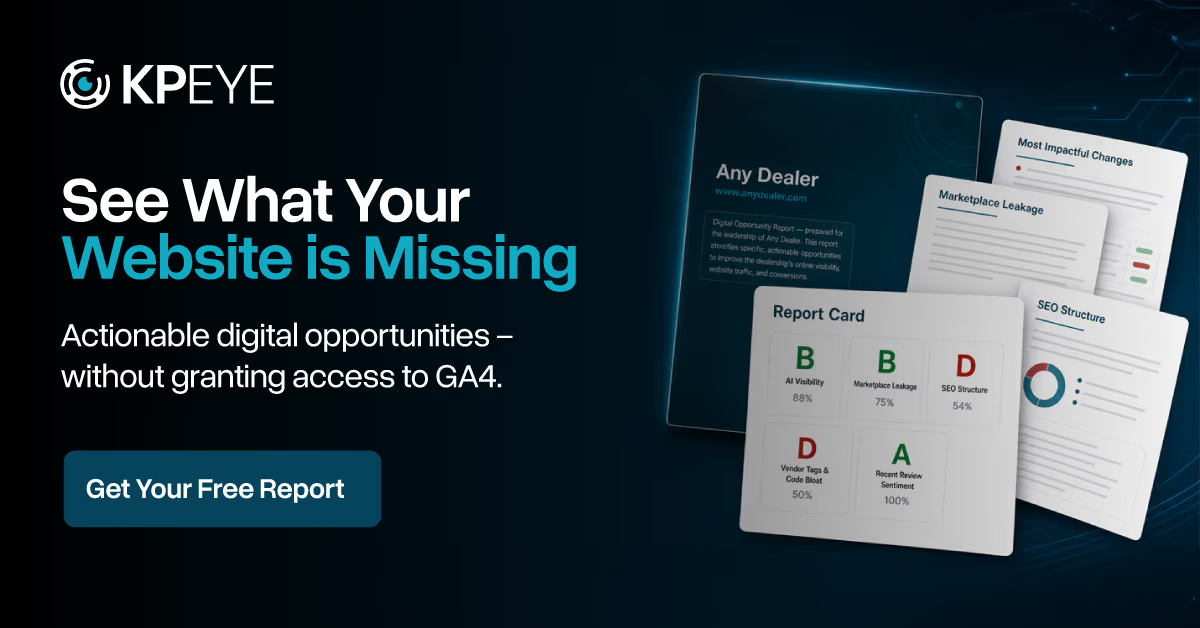
We'd hate to see you
miss out on these insights
Get a free KPEYE report
No subscription, GA4 access granting, and no risk...
just free insights delivered to your inbox!
Request Your Free Report
Get answers about KPEYE reporting, dealership website conversion, GA4 access, ASC compliance, vendor accountability, pricing, and group insights.
Browse by topic. Select a question for a clear answer.
KPEYE is a conversion intelligence and accountability platform for automotive dealerships. It brings website, analytics, traffic, tracking, compliance, and vendor-performance signals into one report so dealership teams can identify conversion problems, prioritize fixes, and verify whether changes worked.
KPEYE is built for dealership leaders, marketing teams, and dealer groups that need clearer answers about website conversion performance. It supports single rooftops, growing groups, and enterprise organizations that want consistent measurement across multiple stores.
No. KPEYE provides independent measurement, reporting, recommendations, and expert coaching. Your dealership, agency, website provider, or other vendors can implement the recommended changes while KPEYE tracks and verifies the results.
No. KPEYE complements GA4. It turns raw analytics and dealership website data into automotive-specific insights, prioritized recommendations, historical comparisons, and a repeatable conversion-improvement process.
Getting started takes only a few minutes. KPEYE requires read-only access to approved data sources such as GA4 and Google Search Console. No website code changes, CRM migration, DMS integration, or platform replacement is required.
KPEYE is priced per dealership website URL. Every tier includes the full platform, while the per-store price decreases for groups with 10 or more rooftops. Current pricing is published on kpeye.com.
Yes. Each website is analyzed independently because traffic quality, design, vendor configurations, tracking, conversion performance, and shopper behavior vary by store.
No. KPEYE subscriptions are month-to-month. Dealerships and dealer groups can cancel without a long-term commitment.
KPEYE reports examine website speed, CTA performance, form completion, ASC event tracking, traffic quality, media performance, SEO visibility, pricing compliance, shopper experience, code bloat, pixels, and other signals that affect dealership website conversion.
KPEYE covers eight primary focus areas, including website speed, ASC conversion events, code and pixel bloat, CTA conversion rate, form completion rate, SRP and VDP usability, media-channel performance, and SEO and content performance. Compliance and consumer-response signals are also included.
Reports are delivered monthly by default. Dealerships actively implementing optimization changes may request twice-monthly reporting.
Yes. Authorized users can refresh reporting to monitor performance as website and tracking changes are implemented.
Yes. Historical reporting helps dealerships review month-over-month progress, compare past website configurations, document changes, and determine which improvements affected performance.
KPEYE analyzes a representative set of high-value pages during each reporting cycle. These typically include the homepage, search-results pages, vehicle-detail pages, trade-in pages, finance pages, and service pages.
Yes. KPEYE shows where conversion is being lost, estimates the significance of the issue, and organizes recommended actions into practical 7-, 30-, and 90-day priorities.
Yes. KPEYE can surface issues such as missing tracking, declining website performance, conversion tools that stop reporting, and other changes that may be costing the dealership leads.
KPEYE includes monthly coaching with a conversion expert. The session reviews results, identifies the highest-impact priorities, and helps the dealership determine what its internal team or vendors should address next.
KPEYE combines data from more than 10 sources. Published sources include Google Analytics, Google Search Console, PageSpeed data, Google Tag Manager, Automotive Standards Council specifications, Google Business Profile, and GTM Inspector.
KPEYE uses read-only data from GA4 and Search Console to evaluate traffic, conversion events, search visibility, website behavior, and other performance signals. KPEYE does not make changes to those accounts.
No. KPEYE does not currently require access to CRM, DMS, or customer-level sales data. Its analysis focuses on dealership website performance, analytics, conversion activity, tracking, compliance, and related marketing signals.
No. Customer records and personally identifiable information are not required. KPEYE focuses on aggregated website, analytics, conversion, compliance, and performance data.
KPEYE requests read-only access to approved accounts and does not modify website configurations, analytics settings, or dealership data. Dealerships should still review current access, privacy, retention, and security terms during onboarding.
KPEYE analyzes a small set of representative pages during each reporting cycle. According to KPEYE, this process has no measurable impact on website performance.
No. KPEYE independently measures and recommends. Changes remain under the control of the dealership and its authorized website, analytics, agency, or technology partners.
Yes. KPEYE’s code-bloat and pixel analysis helps dealerships identify excessive scripts, duplicate tags, tracking conflicts, and vendor code that may affect speed, data quality, or shopper experience.
KPEYE evaluates the major levers that influence conversion, identifies where leads are being lost, and prioritizes changes by potential impact and effort. It then measures the same signals again to show whether the work improved performance.
CTA Conversion Rate, or CCR, measures how effectively individual calls to action turn shopper engagement into lead opportunities. It helps dealers compare buttons and conversion tools instead of relying only on total lead counts.
Form Completion Rate, or FCR, measures how often website sessions result in a completed lead form. It can reveal friction between a shopper opening a form and successfully submitting it.
Slow pages create friction and can cause shoppers to leave before inventory, pricing, or conversion tools load. KPEYE evaluates page-speed signals and helps teams prioritize performance issues that may be reducing engagement or leads.
Yes. KPEYE reviews search-results pages and vehicle-detail pages for usability and conversion issues. The analysis helps dealers understand whether merchandising, layout, calls to action, or page experience may be limiting shopper engagement.
Yes. KPEYE compares media-channel performance and traffic behavior to help dealerships distinguish useful traffic from visits that are unlikely to convert. This gives marketing teams better context for agency and budget conversations.
Yes. SEO, keyword, content performance, and AI-search visibility are part of KPEYE’s website-optimization focus. The report helps dealers identify visibility gaps and understand whether organic traffic is reaching useful pages.
Yes. Recommendations can be logged, assigned, and tracked from open to verified. Before-and-after measurement and historical reporting create a record of what changed, when it changed, and which performance signals moved.
Often, improving conversion allows a dealership to create more opportunities from traffic it already pays for. Results depend on the starting conversion rate, traffic quality, website limitations, and whether recommended improvements are implemented correctly.
Automotive Standards Council specifications create common definitions for dealership website conversion events. Consistent ASC tracking helps dealers measure activity across websites, conversion tools, chat providers, and marketing platforms with fewer reporting gaps.
KPEYE uses a Data Missing indicator to identify conversion activity that may not be reaching GA4 through ASC-compliant events. This helps dealership leaders see which providers may be creating gaps in measurement.
Yes. FTC pricing guidance and compliance monitoring are included in KPEYE’s reporting. The analysis can help identify pricing presentation issues that the dealership and its legal or website partners should review.
KPEYE provides independent evidence of website, media, tracking, and conversion performance. It documents recommendations and verifies whether reported vendor changes were implemented and whether the measured outcome improved.
Yes. KPEYE provides multi-store roll-up reporting, portfolio visibility, and benchmarking so dealer groups can compare rooftops using the same conversion framework.
Group leaders can identify stores with the largest performance gaps, compare trends, prioritize shared resources, and apply successful improvements across additional rooftops. Consistent measurement makes store-to-store comparisons more defensible.
Yes. KPEYE publishes per-store discounts beginning at 10 rooftops, with a larger discount for groups with 20 or more stores. Pricing should be confirmed on kpeye.com before subscribing.
The dealership decides who completes each action. Work may be assigned to an internal marketing team, website provider, agency, analytics specialist, or another vendor. KPEYE supplies the evidence, priority, guidance, and verification process.
No subscription, GA4 access granting, and no risk...
just free insights delivered to your inbox!
Request Your Free Report
Dealers, see what your website is missing without granting GA4 access
Request Your Free Report